Showing posts with label history. Show all posts
Showing posts with label history. Show all posts
Monday, June 13, 2016
Thursday, April 24, 2014

Tuesday, January 14, 2014
Saturday, June 1, 2013
Flashpoint
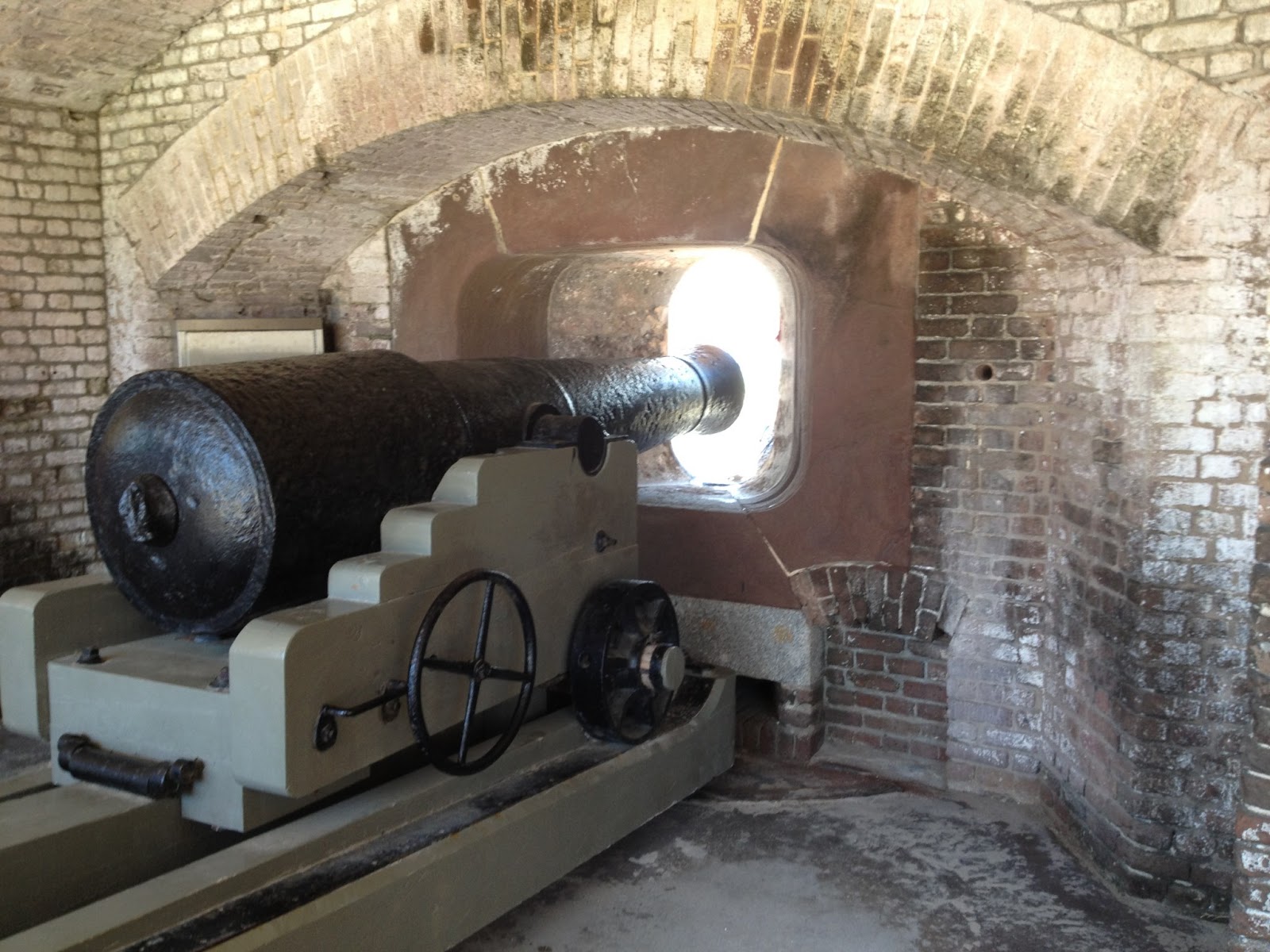
My charmers and I were in Charleston Harbor, South Carolina, today. Took a ferry to the site upon which initial shots fired on April 12, 1861, sparked the American Civil War.

Tuesday, June 14, 2011
Bill Tilghman

William Matthew "Bill" Tilghman (July 4, 1854 – November 1, 1924) was a lawman and gunslinger in the American Old West.
Tilghman along with Heck Thomas and Chris Madsen were collectively known as the Three Guardsmen and were responsible for the arrest and/or killings of many of the worst criminals in 1890's Oklahoma including the eradication of the infamous Wild Bunch.
His friend and fellow lawman Bat Masterson referred to him as "the greatest of us all."
Teddy Roosevelt said "Tilghman would charge hell with a bucket."
Tuesday, June 7, 2011
The World of Cash Laramie and Gideon Miles
 My Cash & Miles adventures mostly take place in the 1880s. An upcoming story is set in 1885 to be exact which, as you can see, was a busy year.
'85 Timeline:
January 4 – The first successful appendectomy is performed by Dr. William W. Grant on Mary Gartside.
February 21 – United States President Chester A. Arthur dedicates the Washington Monument.
March 4 – Grover Cleveland succeeds Chester A. Arthur as President of the United States.
March 14 – W. S. Gilbert and Arthur Sullivan's The Mikado opens at the Savoy Theatre.
May 2 - Good Housekeeping Magazine goes on sale for the first time.
June 17 – The Statue of Liberty arrives in New York Harbor.
July 6 – Louis Pasteur successfully tests his vaccine against rabies. The patient is Joseph Meister, a boy who was bitten by a rabid dog.
July 14 – Sarah E. Goode is the first female African-American to apply for and receive a patent, for the invention of the hideaway bed.
July 23. News of the death of Gen. U. S. Grant, at Mount McGregor, N. Y., received at Philadelphia at 8.12 A. M. The State House bell was tolled sixty-three times, one stroke for each year of his age. Immediately flags were hoisted at half mast in all parts of the city.
September 2 – The Rock Springs Massacre occurs in Rock Springs, Wyoming; 150 white miners attack their Chinese coworkers, killing 28, wounding 15, and forcing several hundred more out of town.
September 15 – A train wreck of the P.T. Barnum Circus kills giant elephant Jumbo.
November 7 – Canadian Pacific Railway: In Craigellachie, British Columbia, construction ends on a railway extending across Canada. Prime Minister Sir John A. MacDonald considers the project to be vital to Canada due to the exponentially greater potential for military mobility.
Books published: The Personal Memoirs of Ulysses S. Grant, Mark Twain's Adventures of Huckleberry Finn is published for the first time, Jules Verne’s Mathias Sandorf, and H. Rider Haggard’s King Solomon's Mines.
Click over to Wikipedia for more '85 events.
Illustration of Gideon Miles by William Erving from the forthcoming eBook ADVENTURES OF CASH LARAMIE AND GIDEON MILES.
Wednesday, May 4, 2011
State Gun Packs a Bang-Up History
The Arizona Republic has an interesting article on colts, Wyatt Earp, Ned Buntline, and that mythical weapon.
Wednesday, December 29, 2010
Jacques LaRamie
I found the history of Jacques LaRamie absolutely fascinating. It struck a note with me, of course, because of my fictional character, Cash Laramie, who has a similar vague story. If you like 'forgotten history' like I do, I recommend reading old guy rambling’s post.
Thursday, August 19, 2010
Say goodbye to the bad guy

"They tell lots of lies about me," he complained. "They say I killed six or seven men for snoring. Well, it ain't true, I only killed one man for snoring". -- John Wesley Hardin who died on this day in 1895.
Hand Gun Trick of Gunslinger John Wesley Hardin | Johnny Cash sings Hardin' Wouldn't Run | Eclepto Funk Americana's John Wesley Hardin | Discovery: Wild West's Most Wanted | The outlaw's weapon | and John Wesley Hardin & The Shootist Archetype.
"I never killed anyone who didn't need killing."
Friday, June 4, 2010
A Hundred Years Ago: Holmes Debuts and O Henry Departs
 A century ago today, the play version of Sir Arthur Conan Doyle's "The Adventure of the Speckled Band" debuted at the Adelphi Theatre in London (written and produced by Doyle, retitled The Stonor Case starring H. A. Saintsbury as Sherlock Holmes).
For more details, check out Wikipedia. And if you'd like, you can watch the marvelous Jeremy Brett in "The Speckled Band" on YouTube.
#
One hundred years ago tomorrow, the master of the twist ending, O Henry, died following a life that was every bit as colorful as any of his characters. "After Twenty Years" was assigned reading for me back in my school days, and it forever changed my taste in storytelling. Click on the link and come back to tell me what you think of this pithy tale of about twelve hundred words.
O Henry bio.
Friday, March 5, 2010
Oliver Typewriter
 Little d knows my fondness for old typewriters and she picked up a gem from a co-worker. I'm now the proud owner of an army green, heavy-duty Oliver typewriter that sports showy batwings. I had never heard of this particular brand and naturally I did a quick search on Wikipedia:
The Oliver Typewriter Company was an American typewriter manufacturer headquartered in Chicago, Illinois. The Oliver Typewriter was the first effective "visible print" typewriter, meaning text was visible to the typist as it was entered. Oliver typewriters were marketed heavily for home use, utilizing local distributors and sales on credit. Oliver produced more than one million machines between 1895 and 1928 and licensed its designs to several international firms.

Oliver typewriter demonstration.
Tuesday, July 14, 2009
Deringer
 My friend Jay is a police officer in our nation's capital and was recently assigned to watch over the Deringer that killed President Lincoln. I can only imagine how it feels to hold a piece of such a small size but of an immense weight.
Digging around the web, I found an interesting article on whether this weapon had been stolen from the Ford's Theatre National Historic Site and replaced with a reproduction... FBI Case File, The Booth Deringer—Genuine Artifact or Replica?. (The bullet that altered history is displayed separately at the National Museum of Health and Medicine, Walter Reed Army Medical Center.)
Henry Deringer bio.
Thursday, January 29, 2009
Reeves Update
 Yesterday, I put up a post about my search for a definitive bio on Bass Reeves. Today, Art Burton, the foremost authority on Reeves, stopped by to shed some light on this fascinating man. I've looked up Mr. Burton's book Black Gun, Silver Star: The Life and Legend of Frontier Marshal Bass Reeves and found it's available through Barnes and Noble, and I'm planning to order a copy tonight.
In his comment, Mr. Burton extended this invitation: "If anyone would like to work on a Reeves project, print or film, they can contact me at aburton@southsuburbancollege.edu." You can read his full response in the comments section of my previous post on Bass Reeves.
Wednesday, January 28, 2009
Bass Reeves
 I’ve always been intrigued by the life of Bass Reeves, U.S. Deputy Marshal. From Wikipedia:
Although he arrested some of the most dangerous criminals of the time, Reeves was never shot (despite having his hat and belt shot off on separate occasions). He had to arrest his own son for murder. Reeves worked a total of thirty-two years as a federal peace officer. During his career he worked the Indian Territory, pre-state Oklahoma. At statehood, Reeves became a member of the Muskogee, Oklahoma, police department at the age of 68. Bass Reeves became a legend in the Indian Territory and was one of Judge Isaac C. Parker, of Fort Smith, Arkansas' federal court, most valued deputies. Reeves was an expert with rifle and pistol. During his long career he developed superior detective skills. Before he retired from federal service in 1907, Reeves had arrested over 3,000 felons. Reeves admitted having to shoot and kill fourteen outlaws in defending his life while making arrests. Many scholars consider Reeves to be one of the most outstanding frontier heroes in United States history.I’ve read quite a few online articles and have run into some conflicting information. If anyone knows where to find the best bio on Reeves, I'd be interested in checking it out.
Reeves links: Legends of America | Handbook of Texas
Monday, October 27, 2008
The Cranmer Family (1885)

A photocopy of my family ca. 1885.
My dad, like many others in the 1970s, was inspired by Alex Haley's Roots and he began tracing our genealogy. He hunted through cemeteries and archives, collecting all kinds of treasures. Among them was a tin photo of our family from the 19th century. My dad had guessed the photo was taken in 1885 because the little girl, Margaret [sitting on her mother's lap], who was born July 8, 1883 appears to be about 2 years old. I.J. [standing behind his mother to the left] is my grandfather's father. It's amazing to peer into the face of a stranger and see yourself.
I remember my father telling me that when he was a young boy, he met most of the children in this photo, but is was his great uncle Charlie [sitting between his parents behind the two children in front] who had impressed him most. He recalled Charlie being a large man with big forearms and biceps from a lifetime of cutting wood. What made this so extraordinary to my dad was that Charlie was born without the use of his legs (someone had written the now non-PC word "cripple" on the photo).
In his research, Dad came across military discharge papers of the family’s patriarch, Alfred [sitting on the right], that show he served in the American Civil War and was wounded at Antietam. The Battle of Antietam was fought on September 17, 1862 near Sharpsburg and Antietam Creek as part of the Maryland Campaign. It was the first major battle in the Civil War to take place on Northern soil and came to be remembered as the bloodiest single-day battle in American history with almost 23,000 casualties. My great-great grandfather was one of fortunate soldiers to survive with, according to the records, a shot to the thigh.
A tale about Alfred's father, John, has been passed down the generations. The story goes that late one night, John was returning from a neighbor's house with an armful of venison when he suddenly encountered several wolves. Knowing that he couldn't outrun the pack, John jumped up on a stump and dispensed with the meat and then quickly left the wolves to enjoy their dinner. A small, insignificant story perhaps but it’s a piece of family history I don't want to be forgotten. And as I click on the publish button, these memories are now a part of the digital age.
Tuesday, September 16, 2008
Is anyone prepared?
Republicans are making fun of Barack Obama’s experience as a community organizer and Democrats are questioning Sarah Palin's lack of foreign policy experience. It made me think of a passage from a book that’s always within my grasp, The Education of Henry Adams (1918).
 In the following excerpt, Adams reflects on the pivotal year of 1861, bemoaning the fact that no one wanted the Civil War nor were they prepared for it, including the newly elected President Lincoln:
 In the following excerpt, Adams reflects on the pivotal year of 1861, bemoaning the fact that no one wanted the Civil War nor were they prepared for it, including the newly elected President Lincoln:
Had young Adams been told that his life was to hang on the correctness of his estimate of the new President, he would have lost. He saw Mr. Lincoln but once; at the melancholy function called an Inaugural Ball. Of course he looked anxiously for a sign of character. He saw a long, awkward figure; a plain, ploughed face; a mind, absent in part, and in part evidently worried by white kid gloves; features that expressed neither self -satisfaction nor any other familiar Americanism, but rather the same painful sense of becoming educated and of needing education that tormented a private secretary, above all a lack of apparent force. Any private secretary in the least fit for his business would have thought, as Adams did, that no man living needed so much education as the new President but that all the education he could get would not be enough.
Tuesday, August 5, 2008
Dillinger's Death
 Last week, The Tainted Archive had a great post on whether Billy the Kid lived to a ripe old age. It reminded me of a similar write-up I did for the Axiom Report back in February on John Dillinger, though not as in-depth as Archive. Borrowing heavily from Wikipedia, here's my old post...
After reading Stephen King's The Death of Jack Hamilton (1991, Needful Things), I decided to look on the net for historical accounts of depression era gangsters, Hamilton being a minor player in the infamous John Dillinger gang. I followed a link to a profile of Dillinger and was amazed to learn about the controversy surrounding his death. Apparently, there were a number of people who doubted that the man killed outside Chicago's Biograph Theater in 1934 was even Dillinger. The evidence came from these observations:
--Some people who knew Dillinger and viewed the body didn't recognize him, with even Dillinger's own father claimed, "That's not my boy!"
--It was noted that the eyes of the corpse were brown, but police records described Dillinger's eyes as grey.
--The body showed signs of both a childhood illness that Dillinger never had and a rheumatic heart condition that would have prevented him from playing baseball in prison and enlisting in the Navy.
--Suspiscions were again raised when it was revealed that the pistol on display at FBI Headquarters as the Colt semi-automatic Dillinger had drawn on agents was manufactured five months after his death.
--In 1963, a letter from "John Dillinger," Hollywood, California and a photo of an aged man was received by the The Indianapolis Star but the newspaper gave it little
attention.
I've never been one to put a lot of faith in conspiracy theories, like some others in this case:
--Dillinger's sister, Audrey, positively identified the body by a childhood scar on his leg. Others who viewed the body may not have recognized him due to the plastic surgery he'd had or the death masks that damaged the face.
--Multiple sets of fingerprints taken from the body by the FBI had characteristics the same as Dillinger's.
An interesting piece of trivia that gave rise to many a legend about Dillinger's well endowed nature came from grainy newsprint copies of a photograph of the corpse covered by a sheet with a 'tent' in a rather inauspicious place. Turns out, it was just an arm stiff from rigor mortis.
Maybe some of these answers will be revealed in next year's Dillinger movie directed by one of the best, Michael Mann, and starring Johnny Depp.
Subscribe to:
Posts (Atom)